Gait MyoElectric Stimulator (GMES)
Getting back to
normal through
improved gait
function
A patented, reciprocal dual stimulator to help improve walking ability in patients with neuromuscular conditions.
Learn More
About GMES
The Problem
Current functional electric stimulation (FES) devices focus on stimulating only one muscle group to overcome foot drop, the inability to raise the front of the foot. Some devices that simply lift the foot do not smooth the halted gait, so a significant abnormal gait pattern may persist. Clinicians who treat patients with neuromuscular deficits of the lower extremities, ultimately want to improve and restore a more natural gait for their patients.
Two common options to control the ankle during walking include 1) Ankle-Foot Orthoses (AFO) which braces the foot to prevent it from dropping, and 2) a single-channel FES which improves foot drop but ignores the contribution that the plantar flexors provide for a more natural gait. In addition, several of the FES devices on the market are cost prohibitive for many people.
The Solution
GMES, an innovative FES system, incorporates proprietary dual-stimulator technology to help improve the walking ability in patients with neuromuscular conditions, such as stroke, cerebral palsy, multiple sclerosis, and peripheral vascular disease. Its patented FES electronics and software infrastructure addresses both the plantar flexors and dorsiflexors, and activates the muscles controlling the ankle. The GMES therapy uses the principles of neuroplasticity to modulate neural pathways that enable the voluntary movement of the muscles needed to activate the paretic and weak muscles. GMES technology can also be easily adapted to activate the muscles controlling the knee, as well as other muscle groups.
GMES is a patented non-significant risk, stimulation system designed to meet Class II, 510k FES medical device requirements. GMES:
- Employs reciprocal dual stimulation of plantar flexors & dorsiflexors to mimic the way muscles are stimulated during normal walking function to assist with controlling joint movement and stability, while improving endurance and speed, as well as quality of life
- Automatically adjusts to walking faster or slower
- Shows potential to help patients improve walking ability and relearn how to walk independently, without long-term dependence on the device
- Utilizes easy to use, wireless, remote control that can mount inside the main unit
- Employs an adaptable sleeve that conforms to many users with adjustable electrode positioning
- An affordable FES system to reach those who need it most
CLINICAL STUDIES demonstrating effectiveness of GMES
Functional Electrical Stimulation (FES) to Dorsiflexors and Plantar Flexors During Gait to Improve Walking in Adults with Chronic Hemiplegia
David G. Embrey, PhD, Sandra L. Holtz, PT, Gad Alon, PhD, Brenna A. Brandsma, DPT, Sarah Westcott McCoy, PhD
Conclusion:
A FES system that stimulates dorsiflexors and plantar flexors, similar to the timing of typical adult gait, combined with daily walking, can improve the walking ability of adults with hemiplegia.
Comparing Four Electrical Stimulators with Different Pulses Properties and Their Effect on The Discomfort and Elicited Dorsiflexion
Gad Alon, David G. Embrey, Brenna A. Brandsma, Jeff Stonestreet
Conclusion:
Shortening the phase duration resulted in a more comfortable and more efficient stimulation that may lead to designing a lower profile, lighter weight, and more cosmetic FES.
Functional Electrical Stimulation Improves Quality of Life by Reducing Intermittent Claudication
David G. Embrey, PhD, Gad Alon, PhD, Brenna A. Brandsma, DPT, Felix Vladimir, MD FACS
Conclusions:
Walking with FES markedly reduced ischemic pain and enhanced QOL compared to just walking.
FES while walking, may offer an effective treatment option for the elderly with PAD and Intermittent Claudication.
3 published clinical studies
Potential to help patients relearn how to walk independently, without long-term dependence on the device.
Showed 19.4% and 32.7% increases in walking endurance and speed, respectivelyImproved quality of life and muscle strength in stroke patients
Clinical benefits of GMES lasted 8-12 weeks after the conclusion of therapy
TWO ISSUED PATENTS
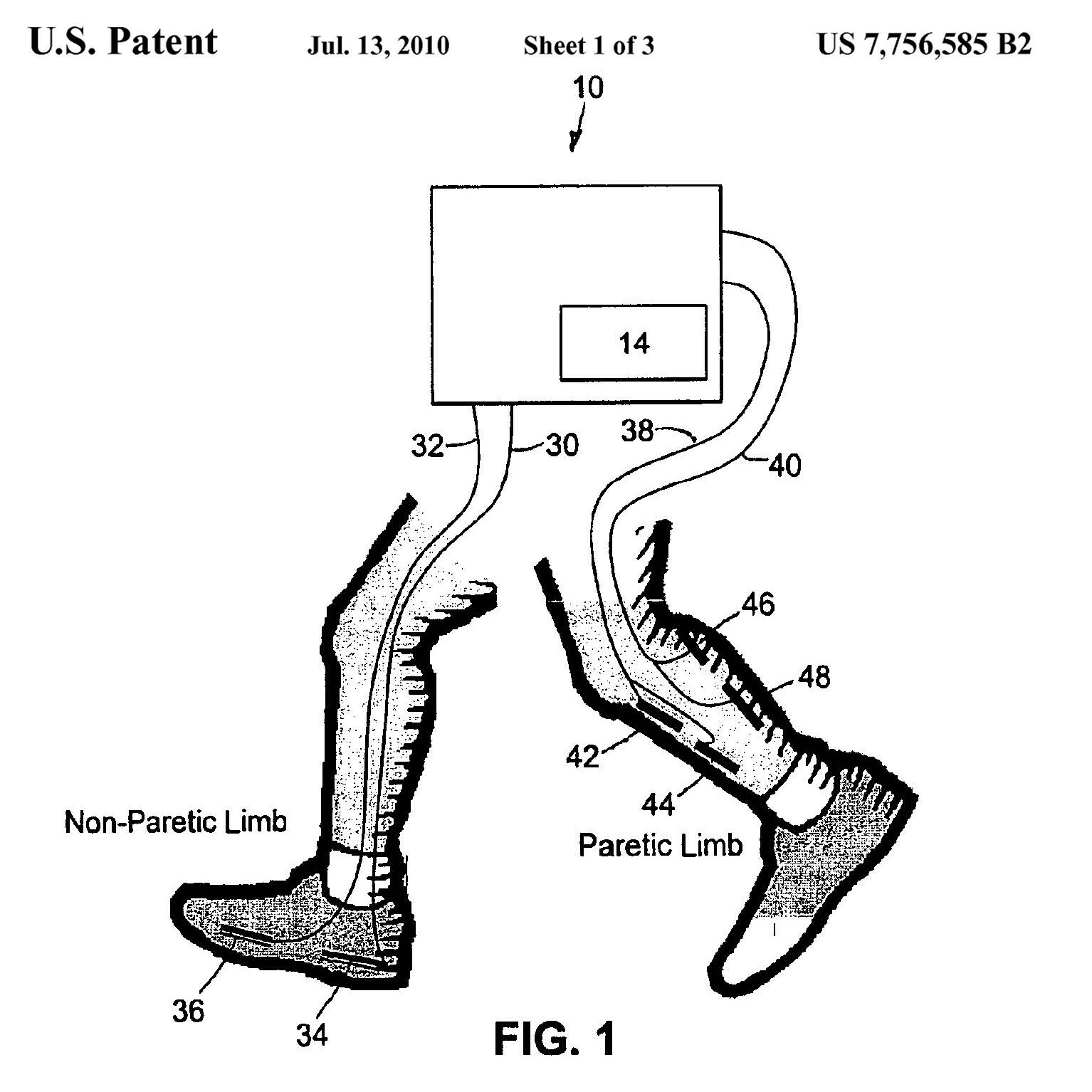
US7756585B2
Inventor:
David Embrey, Samuel Augsburger
Muscle stimulation method and system to improve walking
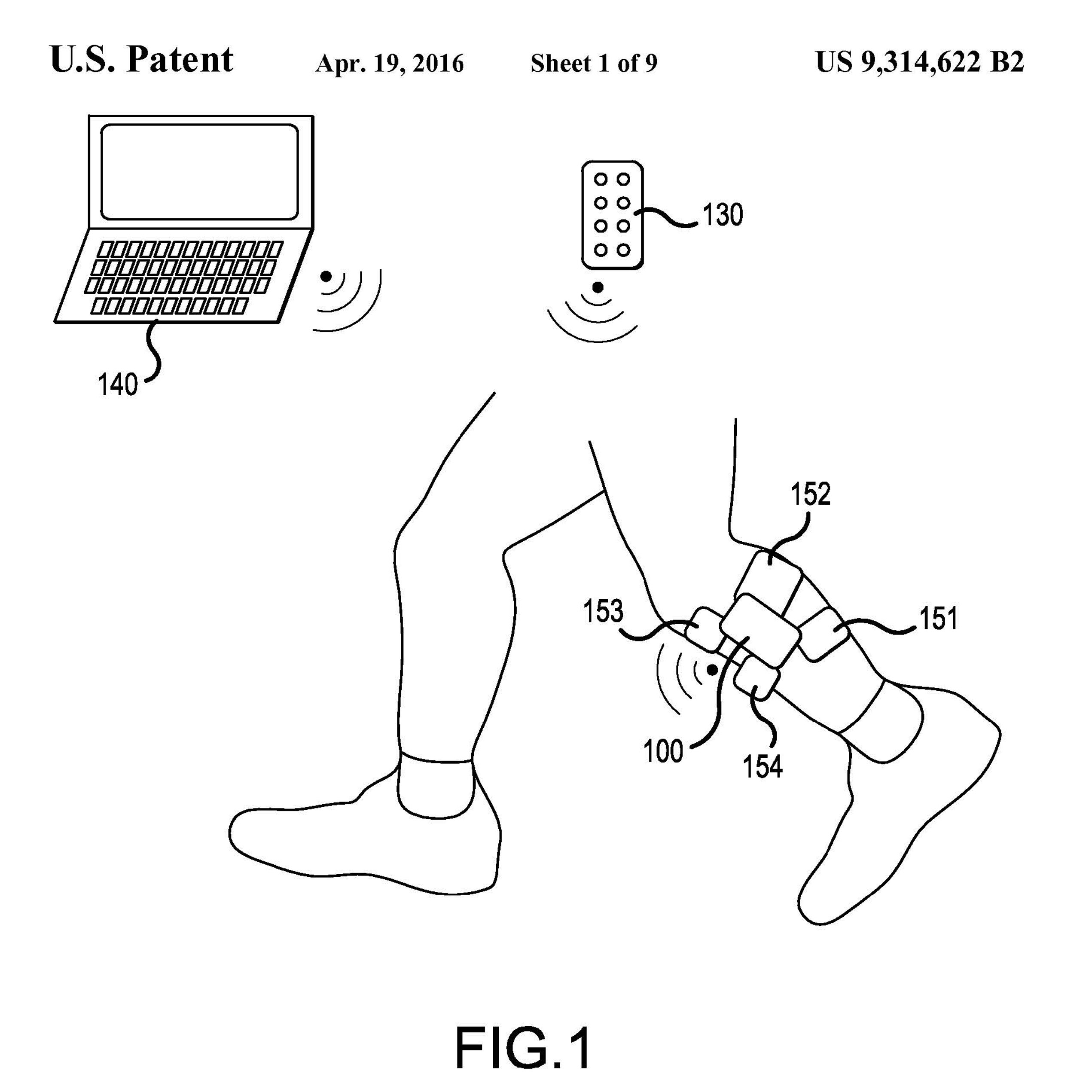
US9314622B2
Inventor:
David Embrey, Jeffrey Stonestreet, Gadi Alon
Functional electrical stimulation (FES) method and
system to improve walking and other locomotion functions
HOW GMES GETS PEOPLE BACK TO NORMAL
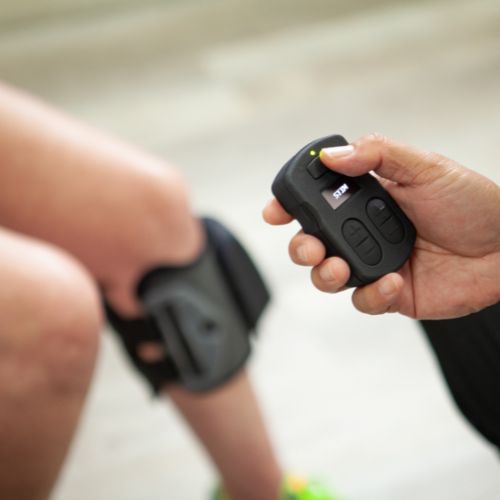
Intuitive and easy-to-use
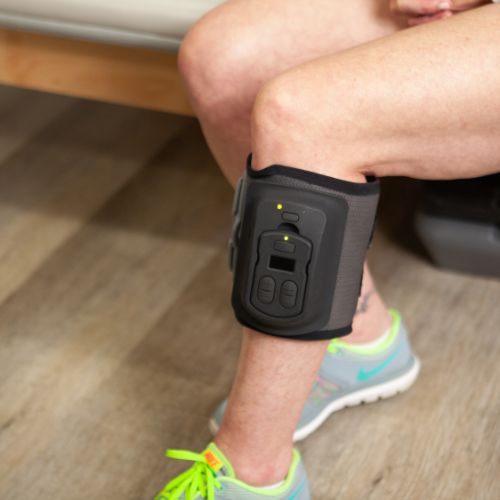
Comfortable, soft-sleeved cuff with hook & loop fastening (electrodes housed in the cuff, so no adhesives or exposed wires)
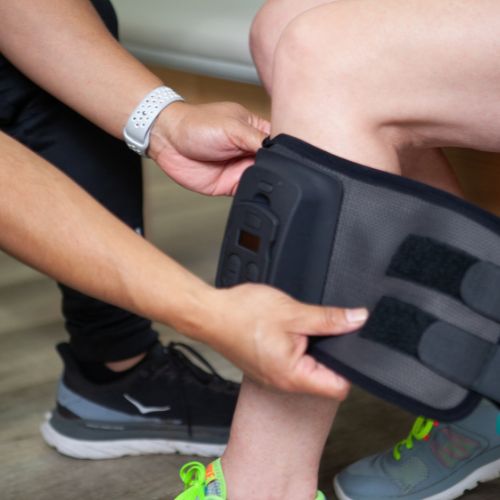
Automatically adjusts to walking faster or slower
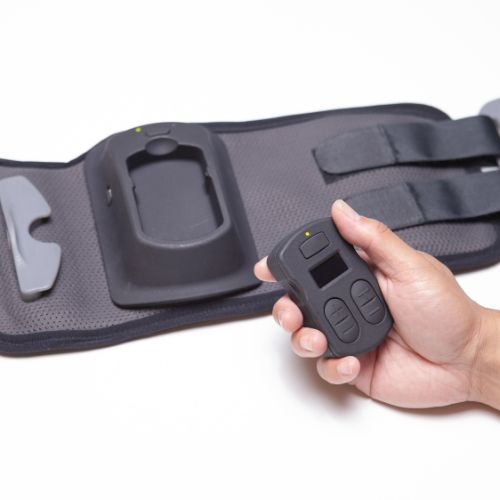
Convenient pocket for remote wireless control
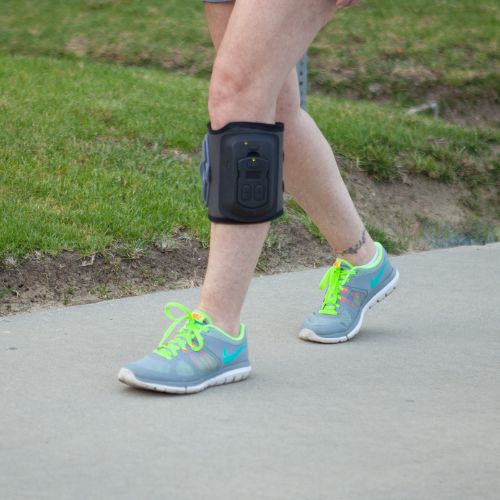
Dual stimulation mimics normal walking function
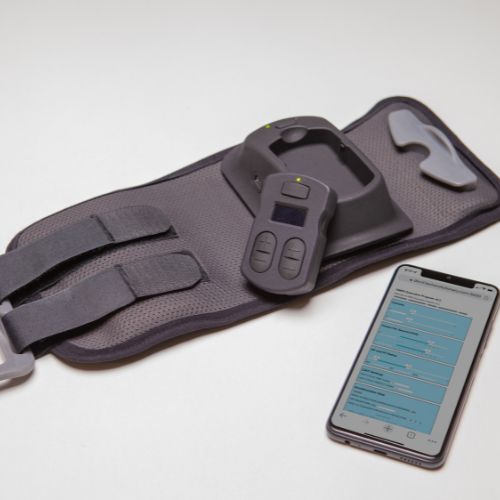
Software with Bluetooth can customize patient settings
Learn More
Market Potential
Market Need
There are an estimated 795,000 stroke patients annually in the United States.
In addition, in the US there are many people living with other neuromuscular conditions that affect mobility, that could benefit from GMES:
- Over 700,000 people are living with Multiple Sclerosis.
- Approximately 500,000 people are living with Cerebral Palsy.
- Nearly 1 million are living with Parkinson’s disease (PD) in the U.S. 60,000 Americans being diagnosed with PD each year.
- Approximately 6.5 million experience Peripheral Artery Disease (PAD), many of whom suffer from Intermittent Claudication (IC).
Market Segments
Physical therapist and healthcare providers (i.e. neurologists )
working with
- Inpatient Rehabilitation
- Outpatient Rehab Facilities
- Skilled Nursing Facilities
- Assisted Living Facilities
- Rural Healthcare
- Home Health Agencies
- Consumers at home with neuromuscular conditions
GMES VS. FOOT DROP FES DEVICES
| GMES | FES Devices Used for Drop Foot |
|---|---|
| Stimulates synergistic muscles, improving joint movement and stability | Stimulates only the dorsiflexor muscles |
| Mimics natural walking function with reciprocal dual stimulation enabled by motion sensors | Aims to prevent tripping, lifting drop foot only, not restore a natural gait |
| Shows potential to help patients relearn how to walk independently | Requires long term use, resulting in dependence on the device indefinitely |
| Intuitive and easy-to-use wireless system | May be difficult for patients to use leading to frustration or ceasing therapy |
| An affordable device to reach those who need it the most | Single channel FES wireless systems are priced between $4,500-$6,000 out-of-pocket cost (without reimbursement) – unaffordable for many patients |
Meet The INNOVATORS

David Embrey, PT, PhD
- Physical Therapist and Founder of MultiCare’s Good Samaritan Children’s Therapy Unit’s Movement Laboratory
- Researcher at MultiCare since 1990
- Patented inventor and winner of two MultiCare Presidential Awards for Excellence in Innovation
Gad Alon, PT, PhD
- Associate Professor Emeritus of Physical Therapy and Rehabilitation Science at the University of Maryland School of Medicine
- Researcher in the design, development, testing and deployment of wearable, wireless, self-administered FES and EBS systems


Jeffrey Stonestreet
- Senior Electrical Design Engineer for the Boeing Company for 31 years (now retired)
- Founder of an electronics company that has built solar power monitors, electric vehicle components and medical devices
About Innovation Lab

The Innovation Institute is an organization focused on transforming healthcare through the development of innovative new products, services, and ideas.
Innovation Lab is the future-forward innovation engine of The Innovation Institute, a healthcare incubator and network focused on transforming healthcare delivery to change people’s lives and improve the long-term health of our communities.
At its core, Innovation Lab is a conduit for next-generation ideas. And a place to champion disruption. We bring together the best and brightest — thinkers, dreamers, doers, and fighters — to explore obstacles and opportunity alike. Together we create transformative change to improve care and help people live better, healthier, longer lives. The future is here.
Learn More About Innovation Lab
Innovation Lab is seeking a commercial partner to incorporate GMES, into their product portfolio. Elevate your product offerings and contact us today.
To learn more, complete the form or give us a call at
(949) 531-4101
Contact us
1 Centerpointe Drive, Suite 100
La Palma, CA 90623
- © GMES 2022 | Terms of Use | Privacy Policy